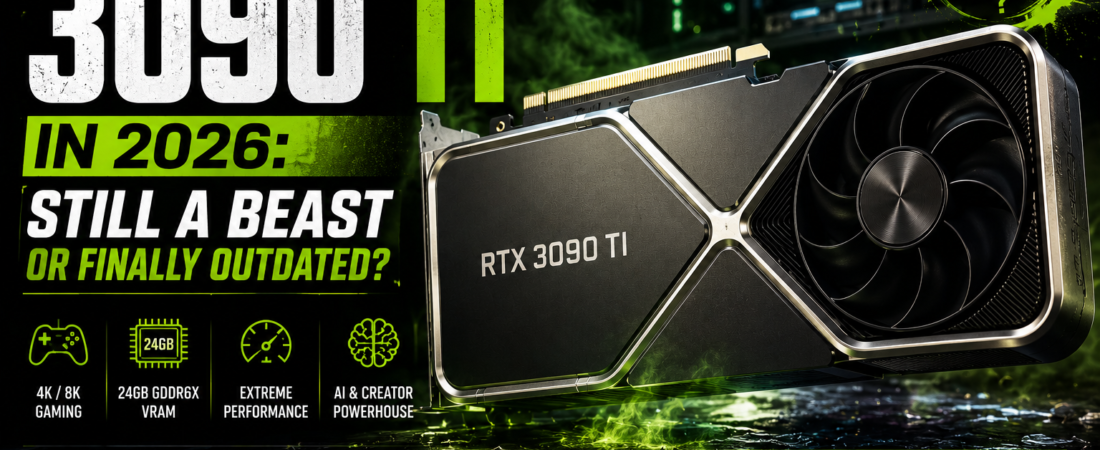
Massive VRAM, Huge Power, and Surprisingly Good Value — But There’s a Catch
The GPU market in 2026 is completely different from what it was a few years ago. New graphics cards keep getting more expensive, games are demanding absurd amounts of VRAM, and AI workloads are exploding faster than anyone expected.
And somehow, right in the middle of all that chaos, the legendary NVIDIA GeForce RTX 3090 is still refusing to die.
In fact, the RTX 3090 has become one of the most debated GPUs on the used market. Some people call it the smartest high-performance purchase in 2026. Others think it’s an outdated power-hungry monster that belongs in a museum next to old mining rigs.
So… who’s right?
Why the RTX 3090 Is Still Popular
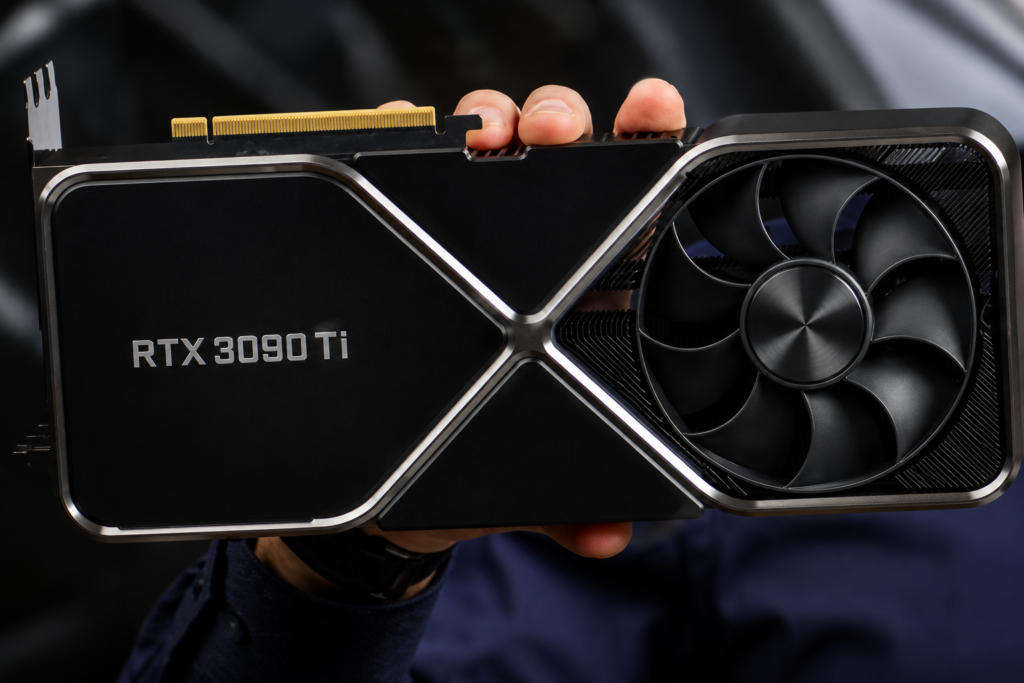
The biggest reason is simple: 24GB of VRAM.
That amount of memory is still massive even by 2026 standards. While many newer GPUs focus on efficiency and AI features, the 3090 still brute-forces its way through workloads like an angry refrigerator with RGB lighting.
For gamers, creators, and AI enthusiasts, that VRAM matters a lot more than people realize.
The card still handles:
- 4K gaming
- Blender rendering
- AI image generation
- Video editing
- Unreal Engine projects
- Large texture packs
- Modded games
- Local AI models
Without immediately running out of memory like some newer mid-range GPUs.
And honestly, there’s something hilarious about watching a card from 2020 still embarrass newer hardware in certain workloads.
Gaming Performance in 2026
Here’s the truth: the RTX 3090 is still extremely fast.
At 1440p and 4K, it continues delivering excellent performance in modern games. With DLSS improvements and frame generation technologies helping newer titles, the card remains more than capable for high-refresh gaming.
In many games, the 3090 still performs close to newer GPUs that cost significantly more.
That’s especially important now because modern AAA games are becoming absolute VRAM goblins.
Some recent releases can easily use:
- 12GB VRAM at 1440p
- 16GB+ at 4K
- Even more with ray tracing and texture mods
This is where the 3090 suddenly becomes very attractive again.
While some newer GPUs may technically benchmark faster, they can struggle in memory-heavy games once settings get pushed too far.
The 3090 simply laughs and keeps going.
The Biggest Advantage: AI and Productivity
This is where the RTX 3090 becomes genuinely difficult to ignore.
For AI workloads, the card is still incredibly valuable because of:
- 24GB VRAM
- CUDA performance
- Tensor cores
- Wide software support
People running:
- Stable Diffusion
- Local LLMs
- Blender
- DaVinci Resolve
- Unreal Engine
- Machine learning projects
Still actively hunt for used RTX 3090 cards.
In fact, many creators prefer a used 3090 over newer mid-range GPUs simply because VRAM matters more than raw gaming FPS in professional workloads.
A newer GPU may win benchmarks.
The 3090 wins survival.
But There Are Problems
Of course, the RTX 3090 is not perfect.
Actually, it has the appetite of a small industrial machine.
Power Consumption
This card consumes a lot of power.
And by “a lot,” we mean your electricity bill may start looking emotionally aggressive.
The RTX 3090 can easily pull over 350 watts under load, meaning:
- Higher temperatures
- More fan noise
- Bigger power supplies
- More heat in your room
During summer, your gaming setup can start feeling suspiciously close to an air fryer.
Used Market Risks
Most RTX 3090 cards in 2026 are being sold second-hand.
That means buyers need to be careful.
Some GPUs:
- Were heavily used for crypto mining
- Ran 24/7 for years
- Have degraded thermal pads
- Need maintenance
- May have warranty issues
A good 3090 can be amazing.
A bad one can become a very expensive desk decoration.
Checking temperatures, fan condition, seller reputation, and stress testing is extremely important before buying.
RTX 3090 vs Newer GPUs
Here’s where things get interesting.
Compared to Mid-Range New GPUs
The 3090 often destroys them in VRAM-heavy tasks.
Many newer cards are more efficient and support newer features, but they sometimes lose badly once memory limitations appear.
Compared to High-End Modern GPUs
New flagship GPUs are obviously faster overall.
But they’re also extremely expensive.
That creates a strange situation where the RTX 3090 becomes a “value monster” for people who need massive VRAM without paying insane next-generation prices.
It’s basically the GPU equivalent of buying an older luxury sports car:
- Ridiculously powerful
- Slightly terrifying
- Still impressive
- Expensive to maintain
- Probably hotter than necessary
But very fun.
Who Should Actually Buy an RTX 3090 in 2026?
The RTX 3090 makes the most sense for:
- AI enthusiasts
- Blender artists
- Video editors
- Unreal Engine creators
- 4K gamers
- People needing large VRAM capacity
It makes less sense for:
- Budget gamers
- Small power supply builds
- Energy-efficient setups
- Casual esports players
- People afraid of heat or electricity bills
If all you play is competitive shooters at 1080p, buying a 3090 is like bringing a rocket launcher to open a soda can.
Final Verdict
So… is the RTX 3090 still worth it in 2026?
Surprisingly, yes.
Not because it’s new.
Not because it’s efficient.
And definitely not because it’s quiet.
The reason the RTX 3090 still matters is simple: 24GB of VRAM continues to age incredibly well in a world where games, AI tools, and creative software keep demanding more memory every year.
It remains one of the most interesting GPUs on the used market because it sits in a strange sweet spot between gaming monster, workstation card, and AI powerhouse.
Sure, it runs hot enough to question your life choices sometimes.
Sure, your power supply might cry a little.
But even in 2026, the RTX 3090 still feels like a GPU that refuses to become irrelevant — and honestly, that’s pretty impressive.